 9.2
9.2
Natural, mineral & organic cream foundation
At GreenBeautyShop, you’ll find natural, mineral and organic cream foundations from high-quality brands, selected for their skin-friendliness, quality and ingredients.
A cream foundation combines beautiful, even coverage with a nourishing, rich formula and is ideal for dry and mature skin types. The rich texture allows cream foundation to be easily and evenly applied to the skin and helps to subtly even out fine lines, redness, pigmentation marks and other imperfections without creating a mask-like effect.
Cream foundation also often provides more coverage than a BB cream or powder foundation, without making the skin look dry or powdery.
Within our collection, you’ll find natural cream foundations with pure mineral pigments, nourishing plant-based ingredients and skin-friendly formulas for even the most sensitive skin.
What is the best natural cream foundation?
Which natural cream foundation is best for you depends on your skin type, your skin’s undertone and your skin tone. A well-chosen cream foundation blends beautifully with the skin and creates a natural, even complexion.
Which skin types are cream foundations best suited to?
Natural cream foundations combine beautiful, even coverage with a rich, nourishing formula. Thanks to their higher concentration of nourishing ingredients, cream foundations are ideal for dry and mature skin.
Cream foundations are ideal for:
Dry skin
Natural cream foundations contain nourishing plant-based oils, natural waxes and skincare ingredients that help keep dry skin supple and comfortable. The rich texture blends beautifully with the skin, minimises the appearance of fine lines caused by dryness and provides even coverage without leaving the skin looking dry or tight.
Mature skin
Natural cream foundations provide mature skin with beautiful, even coverage, help to blur fine lines and ensure a natural, even finish, without leaving the skin feeling dry or heavy. They also offer extra care and comfort to skin that needs more as it ages.
For mature skin, never choose a cream foundation with a matt or semi-matt finish: this makes the skin look older. For a radiant and beautiful result, it’s better to opt for a cream foundation with a soft sheen or even an illuminating finish.
Sensitive skin
Natural cream foundations containing pure mineral pigments, soothing plant extracts and skin-friendly ingredients are often well tolerated by sensitive skin. The rich formula feels comfortable on the skin, whilst redness, uneven skin tone and other imperfections are naturally evened out.
The best cream foundation for your undertone
As well as your skin type and skin tone, your skin’s undertone also plays an important role in choosing the right cream foundation. The undertone determines whether your skin naturally has cooler, neutral or warmer undertones.
A cream foundation with the right undertone gives your skin a beautiful, healthy glow and looks very natural. However, a foundation with the wrong undertone will look unnatural.
Generally speaking, we distinguish between cool undertones, neutral undertones and warm undertones. Choose the best natural cream foundations here to suit your undertone:
For cool undertones
You can recognise a cool undertone by pink to light blue-red hues in the skin. The veins on the inside of the wrist often appear blue or purple. If in doubt, this tip may help: do you burn easily in the sun, and does your skin remain pink or red for a long time afterwards? If so, your skin probably has cool undertones.
For a natural finish, if you have cool undertones, it’s best to choose a foundation shade with pink undertones. Avoid yellow or warmer shades, as these can make your skin look unnatural.
View all cream foundations for skin with cool undertones →
For neutral undertones
This skin type has both cool and warm characteristics. The veins often appear both blue and green, which can sometimes make it difficult to determine the undertone straight away. For example, people with olive-toned skin often have neutral undertones. If in doubt, this tip may help: do you hardly ever burn in the sun, but never really tan? Then your skin probably has neutral undertones.
For a natural result, if you have skin with neutral undertones, it’s best to choose foundation shades with a balanced mix of pink and yellow undertones. However, avoid strongly pink or strongly yellow shades, as these can make your skin look unnatural.
View all cream foundations for skin with neutral undertones →
For warm undertones
You can recognise a warm undertone by golden, yellow and orange-like shades in the skin. The veins on the inside of your wrist often appear green. If in doubt, this tip might help: does your skin take on a lovely golden or brown tint in the sun rather than turning pink? If so, your skin probably has warm undertones.
For a beautiful, natural finish, if you have skin with warm undertones, it’s best to choose a foundation shade with yellow, golden and orange-like undertones that enhance your skin’s natural warmth. Avoid strong pink undertones, as these can make your skin look unnatural.
View all cream foundations for skin with warm undertones →
The best cream foundation for your skin tone
As well as your skin type and undertone, the depth of your skin tone also plays an important role in choosing the right cream foundation. Together, your skin’s tone and undertone determine which foundation shade suits you best.
Always choose a foundation shade whose colour depth (light/dark) matches your own skin tone as closely as possible. A foundation shade that is too light can make your skin look washed-out, whilst one that is too dark will look unnatural against your face and neck.
The best way to test a foundation’s shade is on a small patch of skin just above the side of your jawline. In this spot, you can clearly see whether the foundation shade blends well with your face, the skin below your jawline and your neck. Please note: if both a lighter shade and a slightly darker shade seem to suit your skin equally well, opt for the darker shade to avoid looking too pale.
Are you looking for a shade that falls exactly between two foundation colours? In that case, you can often mix two shades together to achieve the ideal colour depth. Just make sure that both foundations have the same undertone. Mixing two shades with different undertones usually doesn’t give a good result.
Light shades
Cream foundations in a light shade are designed for fair skin tones and ensure an even finish without visible colour differences.
View all natural cream foundations for fair skin →
Medium shades
Cream foundations in a medium shade are suitable for medium skin tones and, for many people, represent the middle range of the colour spectrum.
View all natural cream foundations for medium skin →
Dark shades
Cream foundations in a dark shade are designed for a deeper skin tone and ensure a natural, even complexion without a grey or ashy appearance.
For lighter skin tones, many dark shades can also be used to add extra depth or shadow to certain areas of the face (contouring).
View all natural cream foundations for dark skin →
What do we mean by a good natural cream foundation?
A good natural cream foundation provides an even complexion and comfortable coverage without making the skin feel heavy, dry or suffocated. Cream foundation contains a higher proportion of nourishing ingredients and has a richer texture than powder foundation. As a result, the skin feels softer, more comfortable and less dry, making cream foundation particularly suitable for dry, dehydrated and mature skin.
At GreenBeautyShop, we define a good natural cream foundation as one formulated with high-quality ingredients such as pure mineral pigments, plant-based oils, natural waxes and nourishing plant extracts. These formulas are rich in skin-nourishing ingredients and free from silicones, microplastics, mineral oils and other undesirable substances often found in conventional foundations and even those marketed as ‘natural’.
Not sure which natural cream foundation best suits your skin type? Please feel free to contact our customer service team. Drawing on our knowledge and experience, we’ll be happy to help you.
Which ingredients would you prefer to avoid in cream foundation?
Many conventional cream foundations – and even some marketed as ‘natural’ – contain synthetic substances that can clog the skin, dry it out, irritate it or cause damage in other ways.
These include silicones, mineral oils, microplastics, PEGs, synthetic fragrances and colourants, PFAS, film-forming agents, nanoparticles, bismuth oxychloride, talc of unknown origin, contaminated pigments and certain drying forms of alcohol.
Below, we explain the most common undesirable ingredients in more detail. These can be harmful or even damaging to the skin and/or the environment.
Silicones
Are used to make cream foundation apply more smoothly and give the skin a smooth feel, but they form a sealing layer on the skin. This prevents the skin from absorbing oxygen and hinders important skin functions such as the removal of sebum, heat and waste products.
Mineral oils
Are used to give cream foundation a smooth feel and a creamy texture, but form a barrier on the skin. This prevents the skin from absorbing oxygen and hinders important skin functions such as the release of sebum, heat and waste products.
Microplastics
Synthetic particles used as a cheap way to give foundation more texture and body. Microplastics have no skincare benefits and can inadvertently enter the body via the mouth, lips and the area around the eyes. Furthermore, they are highly persistent and accumulate in the body and the environment.
PEGs (emulsifiers)
These synthetic emulsifiers are used to blend ingredients and improve texture. PEGs can weaken the skin’s natural barrier function, making it easier for other substances to penetrate and be absorbed by the skin. Furthermore, trace amounts of the toxic substances ethylene oxide and 1,4-dioxane may remain during the manufacturing process.
Synthetic fragrances
These are usually added to mask the unpleasant odour of synthetic ingredients in cosmetics, but are among the most common causes of allergic reactions to cosmetics. With prolonged or repeated contact, synthetic fragrances can cause the skin to become hypersensitive and, when exposed to UV radiation, can also trigger further skin reactions. They do not contribute to the product’s effectiveness or skin care benefits.
Synthetic colourants
These are added to give foundation its colour and appearance, but do not contribute to the product’s effectiveness or skin care benefits. Some synthetic colourants can cause skin irritation, hypersensitivity reactions and allergic reactions.
PFAS
Used for their water-repellent properties, long-lasting wear and the smooth feel they give the skin. PFAS are associated with potential health risks and have a detrimental impact on the environment, where these synthetic substances can accumulate over the long term.
Film-formers
Used to help cream foundation adhere better to the skin and stay in place for longer, but they form a sealing layer on the skin. This prevents the skin from absorbing oxygen and hinders important skin functions such as the removal of sebum, heat and waste products.
Nanoparticles
Particles that have been deliberately reduced to the nanoscale through technological processing in order to alter or enhance the properties of a raw material. Due to their extremely small size, nanoscale substances can behave differently from the same substance in its original, larger particle form, raising questions about their potential effects on and safety for the human body and the environment.
Bismuth Oxychloride
Used to give foundation a shimmering or light-reflecting effect, but may cause irritation, itching or discomfort in some people with sensitive skin.
Talc of unknown origin
Used to give foundation a soft texture and a matt finish. The quality and origin of talc are important, as inadequately controlled raw materials may contain undesirable contaminants.
Contaminated pigments
Colour pigments largely determine the quality of a foundation. The purity and origin of pigments are important, as lower-quality pigments may contain undesirable contaminants.
Alcohol (such as Alcohol Denat.)
Used to make foundation lighter and help it dry more quickly, but with frequent use it can dry out the skin and reduce comfort.
Within our range, the focus is on natural, mineral and organic cream foundations free from these ingredients, with an emphasis on a formulation that is as skin-friendly as possible and feels pleasant on the skin.
Frequently asked questions about cream foundation
Which skin types is cream foundation best suited to?
Cream foundation is particularly suitable for dry, sensitive and mature skin, but can also be a good choice for other skin types when extra comfort, skincare benefits or coverage are desired.
Does cream foundation provide more coverage than liquid foundation?
This varies by product, but cream foundation often offers medium to high coverage thanks to its richer texture.
Is cream foundation suitable for sensitive skin?
Yes. Within this collection, you’ll find various fragrance-free and skin-friendly cream foundations that are suitable for sensitive skin.
Are there any vegan cream foundations available?
Yes. Within this collection, you’ll find various vegan cream foundations free from ingredients of animal origin.
Are all cream foundations cruelty-free?
Yes. All products within this collection are cruelty-free.

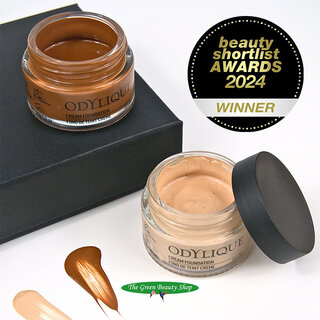
Ivory or light alabaster - Silky and ultra-nourishing, 100% natural foundation with SPF25 for dry, mature, or sensitive skin, rich in karanja oil and zinc oxide and pomegranate, rosemary and chamomile extracts. Jar 30ml
Excl. Shipping costs

For various light skin tones - Silky and ultra-nourishing, 100% natural foundation with SPF25 for dry, mature, or sensitive skin, rich in karanja oil and zinc oxide and pomegranate, rosemary and chamomile extracts. Jar 30ml
Excl. Shipping costs

Light with pink undertone - Silky and ultra-nourishing, 100% natural foundation with SPF25 for dry, mature, or sensitive skin, rich in karanja oil and zinc oxide, pomegranate, rosemary and chamomile extracts. Jar 30ml
Excl. Shipping costs

Light-medium at golden tones - Silky, ultra-nourishing 100% natural foundation with SPF25 for dry, mature or sensitive skin, rich in karanja oil and zinc oxide, pomegranate, rosemary and chamomile extracts. Jar 30ml
Excl. Shipping costs

Light to medium with warm undertones - Silky, ultra-nourishing 100% natural foundation with SPF25 for dry, mature or sensitive skin, rich in karanja oil and zinc oxide, pomegranate, rosemary and chamomile extracts. Jar 30ml
Excl. Shipping costs

Cool medium brown - Silky and ultra-nourishing, 100% natural foundation with SPF25 for dry, mature, or sensitive skin, rich in karanja oil and zinc oxide, pomegranate, rosemary and chamomile extracts. Jar 30ml
Excl. Shipping costs

Warm medium brown - Silky and ultra-nourishing, 100% natural foundation with SPF25 for dry, mature, or sensitive skin, rich in karanja oil and zinc oxide and antioxidant-rich pomegranate, rosemary and chamomile extracts. Jar 30ml
Excl. Shipping costs

Warm dark olive - Silky and ultra-nourishing, 100% natural foundation with SPF25 for dry, mature, or sensitive skin, rich in karanja oil and zinc oxide, pomegranate, rosemary and chamomile extracts. Jar 30ml
Excl. Shipping costs
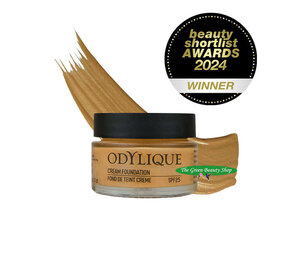
Neutral sienna brown - Silky and ultra-nourishing, 100% natural foundation with SPF25 for dry, mature, or sensitive skin, rich in karanja oil and zinc oxide, pomegranate, rosemary and chamomile extracts. Jar 30ml
Excl. Shipping costs

Warm neutral sienna terracotta brown - Silky, ultra-nourishing 100% natural foundation with SPF25 for dry, mature or sensitive skin, rich in karanja oil and zinc oxide, pomegranate, rosemary and chamomile extracts. Jar 30ml
Excl. Shipping costs

Rich-cool deep chocolate brown - Silky and ultra-nourishing, 100% natural foundation with SPF25 for dry, mature, or sensitive skin, rich in karanja oil and zinc oxide, pomegranate, rosemary and chamomile extracts. Jar 30ml
Excl. Shipping costs

Very dark ebony-espresso - Silky smooth and ultra-nourishing, 100% natural foundation with SPF25 for dry, mature, or sensitive skin, rich in karanja oil and zinc oxide, pomegranate, rosemary and chamomile extracts. Jar 30ml
Excl. Shipping costs
Natural, mineral & organic cream foundation
At GreenBeautyShop, you’ll find natural, mineral and organic cream foundations from high-quality brands, selected for their skin-friendliness, quality and ingredients.
A cream foundation combines beautiful, even coverage with a nourishing, rich formula and is ideal for dry and mature skin types. The rich texture allows cream foundation to be easily and evenly applied to the skin and helps to subtly even out fine lines, redness, pigmentation marks and other imperfections without creating a mask-like effect.
Cream foundation also often provides more coverage than a BB cream or powder foundation, without making the skin look dry or powdery.
Within our collection, you’ll find natural cream foundations with pure mineral pigments, nourishing plant-based ingredients and skin-friendly formulas for even the most sensitive skin.
What is the best natural cream foundation?
Which natural cream foundation is best for you depends on your skin type, your skin’s undertone and your skin tone. A well-chosen cream foundation blends beautifully with the skin and creates a natural, even complexion.
Which skin types are cream foundations best suited to?
Natural cream foundations combine beautiful, even coverage with a rich, nourishing formula. Thanks to their higher concentration of nourishing ingredients, cream foundations are ideal for dry and mature skin.
Cream foundations are ideal for:
Dry skin
Natural cream foundations contain nourishing plant-based oils, natural waxes and skincare ingredients that help keep dry skin supple and comfortable. The rich texture blends beautifully with the skin, minimises the appearance of fine lines caused by dryness and provides even coverage without leaving the skin looking dry or tight.
Mature skin
Natural cream foundations provide mature skin with beautiful, even coverage, help to blur fine lines and ensure a natural, even finish, without leaving the skin feeling dry or heavy. They also offer extra care and comfort to skin that needs more as it ages.
For mature skin, never choose a cream foundation with a matt or semi-matt finish: this makes the skin look older. For a radiant and beautiful result, it’s better to opt for a cream foundation with a soft sheen or even an illuminating finish.
Sensitive skin
Natural cream foundations containing pure mineral pigments, soothing plant extracts and skin-friendly ingredients are often well tolerated by sensitive skin. The rich formula feels comfortable on the skin, whilst redness, uneven skin tone and other imperfections are naturally evened out.
The best cream foundation for your undertone
As well as your skin type and skin tone, your skin’s undertone also plays an important role in choosing the right cream foundation. The undertone determines whether your skin naturally has cooler, neutral or warmer undertones.
A cream foundation with the right undertone gives your skin a beautiful, healthy glow and looks very natural. However, a foundation with the wrong undertone will look unnatural.
Generally speaking, we distinguish between cool undertones, neutral undertones and warm undertones. Choose the best natural cream foundations here to suit your undertone:
For cool undertones
You can recognise a cool undertone by pink to light blue-red hues in the skin. The veins on the inside of the wrist often appear blue or purple. If in doubt, this tip may help: do you burn easily in the sun, and does your skin remain pink or red for a long time afterwards? If so, your skin probably has cool undertones.
For a natural finish, if you have cool undertones, it’s best to choose a foundation shade with pink undertones. Avoid yellow or warmer shades, as these can make your skin look unnatural.
View all cream foundations for skin with cool undertones →
For neutral undertones
This skin type has both cool and warm characteristics. The veins often appear both blue and green, which can sometimes make it difficult to determine the undertone straight away. For example, people with olive-toned skin often have neutral undertones. If in doubt, this tip may help: do you hardly ever burn in the sun, but never really tan? Then your skin probably has neutral undertones.
For a natural result, if you have skin with neutral undertones, it’s best to choose foundation shades with a balanced mix of pink and yellow undertones. However, avoid strongly pink or strongly yellow shades, as these can make your skin look unnatural.
View all cream foundations for skin with neutral undertones →
For warm undertones
You can recognise a warm undertone by golden, yellow and orange-like shades in the skin. The veins on the inside of your wrist often appear green. If in doubt, this tip might help: does your skin take on a lovely golden or brown tint in the sun rather than turning pink? If so, your skin probably has warm undertones.
For a beautiful, natural finish, if you have skin with warm undertones, it’s best to choose a foundation shade with yellow, golden and orange-like undertones that enhance your skin’s natural warmth. Avoid strong pink undertones, as these can make your skin look unnatural.
View all cream foundations for skin with warm undertones →
The best cream foundation for your skin tone
As well as your skin type and undertone, the depth of your skin tone also plays an important role in choosing the right cream foundation. Together, your skin’s tone and undertone determine which foundation shade suits you best.
Always choose a foundation shade whose colour depth (light/dark) matches your own skin tone as closely as possible. A foundation shade that is too light can make your skin look washed-out, whilst one that is too dark will look unnatural against your face and neck.
The best way to test a foundation’s shade is on a small patch of skin just above the side of your jawline. In this spot, you can clearly see whether the foundation shade blends well with your face, the skin below your jawline and your neck. Please note: if both a lighter shade and a slightly darker shade seem to suit your skin equally well, opt for the darker shade to avoid looking too pale.
Are you looking for a shade that falls exactly between two foundation colours? In that case, you can often mix two shades together to achieve the ideal colour depth. Just make sure that both foundations have the same undertone. Mixing two shades with different undertones usually doesn’t give a good result.
Light shades
Cream foundations in a light shade are designed for fair skin tones and ensure an even finish without visible colour differences.
View all natural cream foundations for fair skin →
Medium shades
Cream foundations in a medium shade are suitable for medium skin tones and, for many people, represent the middle range of the colour spectrum.
View all natural cream foundations for medium skin →
Dark shades
Cream foundations in a dark shade are designed for a deeper skin tone and ensure a natural, even complexion without a grey or ashy appearance.
For lighter skin tones, many dark shades can also be used to add extra depth or shadow to certain areas of the face (contouring).
View all natural cream foundations for dark skin →
What do we mean by a good natural cream foundation?
A good natural cream foundation provides an even complexion and comfortable coverage without making the skin feel heavy, dry or suffocated. Cream foundation contains a higher proportion of nourishing ingredients and has a richer texture than powder foundation. As a result, the skin feels softer, more comfortable and less dry, making cream foundation particularly suitable for dry, dehydrated and mature skin.
At GreenBeautyShop, we define a good natural cream foundation as one formulated with high-quality ingredients such as pure mineral pigments, plant-based oils, natural waxes and nourishing plant extracts. These formulas are rich in skin-nourishing ingredients and free from silicones, microplastics, mineral oils and other undesirable substances often found in conventional foundations and even those marketed as ‘natural’.
Not sure which natural cream foundation best suits your skin type? Please feel free to contact our customer service team. Drawing on our knowledge and experience, we’ll be happy to help you.
Which ingredients would you prefer to avoid in cream foundation?
Many conventional cream foundations – and even some marketed as ‘natural’ – contain synthetic substances that can clog the skin, dry it out, irritate it or cause damage in other ways.
These include silicones, mineral oils, microplastics, PEGs, synthetic fragrances and colourants, PFAS, film-forming agents, nanoparticles, bismuth oxychloride, talc of unknown origin, contaminated pigments and certain drying forms of alcohol.
Below, we explain the most common undesirable ingredients in more detail. These can be harmful or even damaging to the skin and/or the environment.
Silicones
Are used to make cream foundation apply more smoothly and give the skin a smooth feel, but they form a sealing layer on the skin. This prevents the skin from absorbing oxygen and hinders important skin functions such as the removal of sebum, heat and waste products.
Mineral oils
Are used to give cream foundation a smooth feel and a creamy texture, but form a barrier on the skin. This prevents the skin from absorbing oxygen and hinders important skin functions such as the release of sebum, heat and waste products.
Microplastics
Synthetic particles used as a cheap way to give foundation more texture and body. Microplastics have no skincare benefits and can inadvertently enter the body via the mouth, lips and the area around the eyes. Furthermore, they are highly persistent and accumulate in the body and the environment.
PEGs (emulsifiers)
These synthetic emulsifiers are used to blend ingredients and improve texture. PEGs can weaken the skin’s natural barrier function, making it easier for other substances to penetrate and be absorbed by the skin. Furthermore, trace amounts of the toxic substances ethylene oxide and 1,4-dioxane may remain during the manufacturing process.
Synthetic fragrances
These are usually added to mask the unpleasant odour of synthetic ingredients in cosmetics, but are among the most common causes of allergic reactions to cosmetics. With prolonged or repeated contact, synthetic fragrances can cause the skin to become hypersensitive and, when exposed to UV radiation, can also trigger further skin reactions. They do not contribute to the product’s effectiveness or skin care benefits.
Synthetic colourants
These are added to give foundation its colour and appearance, but do not contribute to the product’s effectiveness or skin care benefits. Some synthetic colourants can cause skin irritation, hypersensitivity reactions and allergic reactions.
PFAS
Used for their water-repellent properties, long-lasting wear and the smooth feel they give the skin. PFAS are associated with potential health risks and have a detrimental impact on the environment, where these synthetic substances can accumulate over the long term.
Film-formers
Used to help cream foundation adhere better to the skin and stay in place for longer, but they form a sealing layer on the skin. This prevents the skin from absorbing oxygen and hinders important skin functions such as the removal of sebum, heat and waste products.
Nanoparticles
Particles that have been deliberately reduced to the nanoscale through technological processing in order to alter or enhance the properties of a raw material. Due to their extremely small size, nanoscale substances can behave differently from the same substance in its original, larger particle form, raising questions about their potential effects on and safety for the human body and the environment.
Bismuth Oxychloride
Used to give foundation a shimmering or light-reflecting effect, but may cause irritation, itching or discomfort in some people with sensitive skin.
Talc of unknown origin
Used to give foundation a soft texture and a matt finish. The quality and origin of talc are important, as inadequately controlled raw materials may contain undesirable contaminants.
Contaminated pigments
Colour pigments largely determine the quality of a foundation. The purity and origin of pigments are important, as lower-quality pigments may contain undesirable contaminants.
Alcohol (such as Alcohol Denat.)
Used to make foundation lighter and help it dry more quickly, but with frequent use it can dry out the skin and reduce comfort.
Within our range, the focus is on natural, mineral and organic cream foundations free from these ingredients, with an emphasis on a formulation that is as skin-friendly as possible and feels pleasant on the skin.
Frequently asked questions about cream foundation
Which skin types is cream foundation best suited to?
Cream foundation is particularly suitable for dry, sensitive and mature skin, but can also be a good choice for other skin types when extra comfort, skincare benefits or coverage are desired.
Does cream foundation provide more coverage than liquid foundation?
This varies by product, but cream foundation often offers medium to high coverage thanks to its richer texture.
Is cream foundation suitable for sensitive skin?
Yes. Within this collection, you’ll find various fragrance-free and skin-friendly cream foundations that are suitable for sensitive skin.
Are there any vegan cream foundations available?
Yes. Within this collection, you’ll find various vegan cream foundations free from ingredients of animal origin.
Are all cream foundations cruelty-free?
Yes. All products within this collection are cruelty-free.